Sunday, June 26, 2022

The Japanese Cemetery Park near Serangoon Garden in Singapore

Mention the word, cemetery, in Singapore and people would likely ask if you are going to lim chu kang or bukit brown. Some might have heard of a Japanese cemetery although when probed further on the location; there's a high chance you would draw a blank.

Today, I am finally going to share the pictures in this post! My apology in advance as the photographs were taken half a year ago (in December 2021); procrastination is a bitch when there are over 100 photographs.

Going there is not difficult using public transportation; take bus no 76 from Ang Mo Kio MRT station, drop at bus stop 63199 (after philips avenue) and then walk in from Philips Avenue to Chuan Hoe Avenue.

Distance from bus stop to entrance of The Japanese Cemetery Park is only about 400 meters. The only thing to pray for is "no rain" as the path in isn't sheltered. 

Notice back then; closed on Sundays and public holidays. With the relaxation of safe management measures, I am unsure if the policy has changed. 

"Welcoming" us to the cemetery park is the Hinomoto Jizo Guardian Deity (Chinese would know him as 地藏菩薩 or Kṣitigarbha Bodhisattva) and his little monks in front of him. 

The Hinomoto Jizo Guardian Deity was erected to pray for the souls of 41 Japanese civilians who died at Jurong Camp after the war, while awaiting repatriation back to Japan. 

Now, this memorial park is the "largest Japanese cemetery in Southeast Asia at 29,359 square meters, consisting of 910 tombstones that contain the remains of members of the Japanese community in Singapore" and I honestly don't know where to start, despite taking a ton of photos! 

Well, best to let it be a photo post then, where pictures do most of the talking! I would still share some interesting information, based on what I found. 

History of the cemetery - started in 1891 and last burial was before 1973, after the Singapore government stopped new burials, except in approved, designated areas. The cemetery park is now maintained by the Japanese Association, Singapore.

Hm.... was this remnants of an ancient wooden building?
Or a cemetery marker?

Most Chinese cemeteries would have tigers / lions as guardians for the tombs. Given the weather elements which have eroded its features, I am guessing this is supposed to be an ape.

Tombs, tombs and more tombs. There were Chinese inscriptions but they were simply names or areas they came from and I don't quite understand the Kanji references. It didn't help that my written Chinese is quite lousy.

Scratching my head on this.
Botanical memorial? 

Social media influencers would purposely visit the cemetery for the metal arches that played host to the beautiful Bougainvillea flowers. During flowering season, it was way more stunning than the above.

Mido - the prayer hall. This was the third installation (first as in 1911) and although looking just like your typical Japanese temple, it's non religious in nature. Not sure what that means since the statues housed within were from Buddhism.

Plaque stating that the current mido was built in 1985.

War Memorial for those who died in World War 2, including Japanese soldiers and war criminals; this might be sensitive in China but for Singapore, we acknowledged that war is terrible but lessons must be learnt to prevent it from happening again.

From the Chinese inscriptions, war related too.

Donated stone bench; such donations were common as I remember seeing a few similar ones when I was studying in primary and secondary schools.
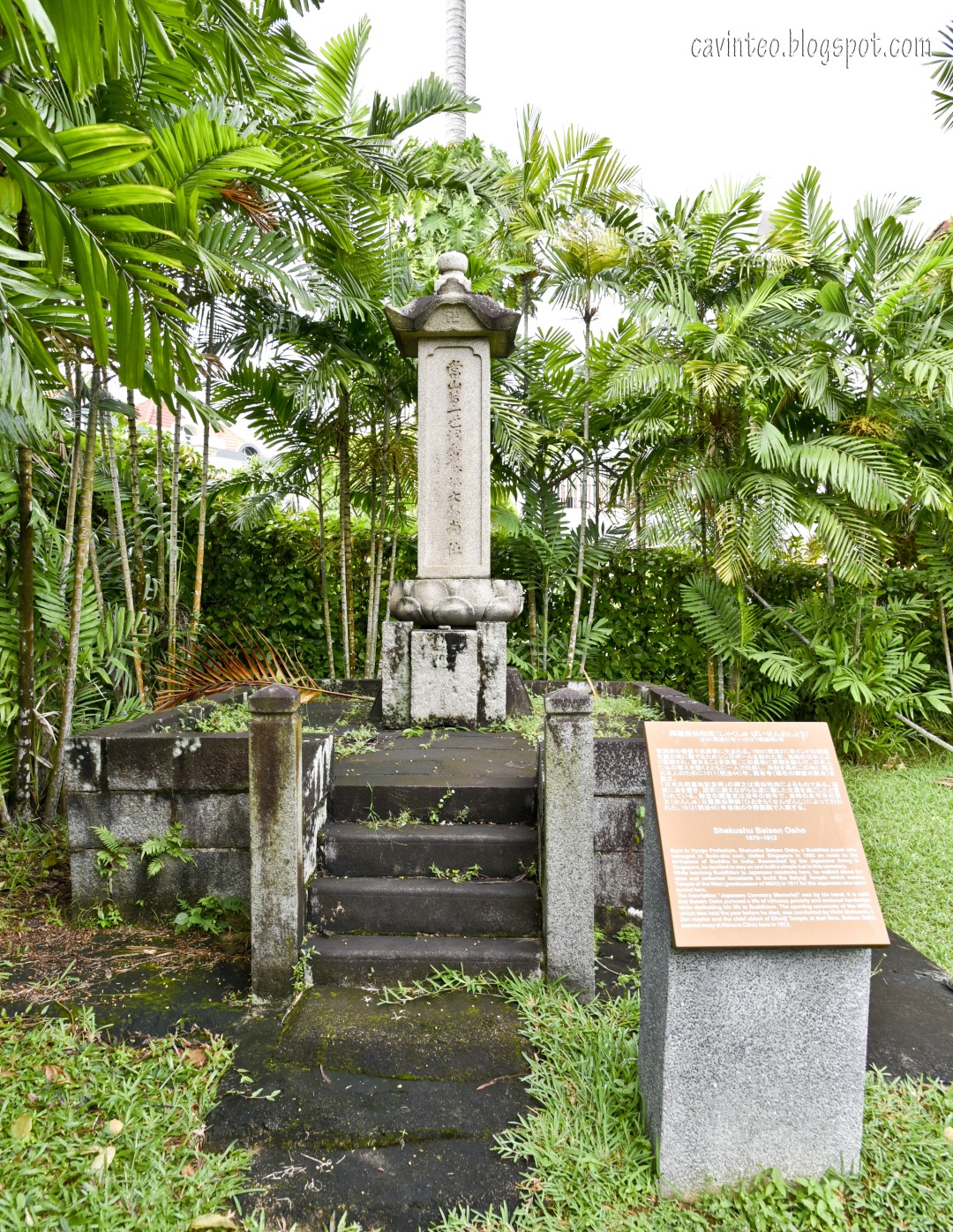
Tomb of a Japanese monk who came to Singapore in 1893 and passed away in 1912. Aside from teaching Buddhism to fellow Japanese, he was also active in collecting donations for the building of the first Saiyuji temple (the first installation of the mido).

Peaceful "backyard".

An unusual Chinese tomb; it was said to house an old-time tomb keeper of the cemetery, who was Chinese, and the Japanese Association allowed him to be bury in the cemetery as gratitude for his services. 

Japanese garden! According to the map, there's supposed to be a lychee tree in front of me. Let me hop over and check out the tree as I have no idea how a lychee tree looks like.

I noticed the information panel but beside it was a tree that seemed struck by lighting, with its crown missing. Is it even alive? Anyway, it was said that due to Singapore's climate, the lychee tree can't bear fruits. 

In Japan, this would be used to wash your face and hand before you go into the temple. However, this isn't a temple so I am unsure of its purpose.

Resting place for Mr Takeshiro Nishimura; a doctor and author who came to Singapore in 1902 and was President of the Japanese Association in 1935, at a time when there was an anti Japanese tide. 

A charnel hosting the remains of Mr Otokichi Yamamato, who migrated to Singapore in 1862 and became Singapore's first Japanese resident. His original tomb was Lim Chu Kang (then known as Choa Chu Kang cemeteries) and was moved over to the Japanese Cemetery in 2005. 

More memorials for the war dead, I think. The second picture actually indicated the names of the deceased and they were exclusively from the army. 

When you talk about the origins of the Japanese Cemetery in Singapore, one name will pop out. Mr Futaki Takajiro, a brothel owner, who offered his own rubber plantation as a graveyard for fellow Japanese who were unable to be buried in Japan. Fact is, there were two more founders, Shibuya Ginji and Nakagawa Kikuzo, who were also brothel owners. 

Memorial Plaza - no one is buried here. It merely named those well known Japanese in Singapore. Not sure if I would remember any from that era. Maybe Tomoyuki Yamashita, who invaded Singapore back in 1942 and Mamoru Shinozaki, who wrote autobiography of his time in Singapore during World War 2. 

Of course, a vending machine must be present.
Given that Japan is the land of vending machines!

Broken beam.

Bougainvillea flowers again. I visited with a friend of mine who wanted to check out the cemetery but didn't have anyone to accompany him as people, generally, are not keen in cemeteries. Obviously, I am the odd one out.

More of the tombs. Unlike Chinese / Christian tombs, the Japanese one is minimalist and simple, without heavy play on statues and colors. Nothing much that would draw my attention. 

Shelters covered with vines! Give them a few hundred years and you wouldn't have recognize that there's a human made structure underneath! p.s. provided the wood didn't break. 

Oldest grave for a Ms Toma Sato, who died in 1889. You may wonder how come she was buried before the start of the cemetery in 1891. It's a matter of official and unofficial; unofficially, the area was already used as a cemetery before approval was granted by the British Colonial government.

This panel explained the origins of karayuki san, a term used to refer to Japanese prostitutes'. As many died penniless, their tombs were just marked with a simple wooden gravestone that decayed as time goes by. 

First one was a memorial for Futabatei Shimei, "a Russian literary scholar, translator and novelist). He was cremated in Singapore but remains were sent back to Tokyo and buried in Somei cemetery. Second one was for Kanou Ueyama, eldest son of the inventor of the mosquito coil incense. 

Tomb of Field Marshal Count Hisaichi Terauchi; the highest ranking Japanese soldier at Southeast Asia when Japan surrendered during World War 2 but he never stood trial for war crimes as he died in 1946. He ever ordered that "that all Allied prisoners of war in his command area were to be massacred if Japan was invaded".
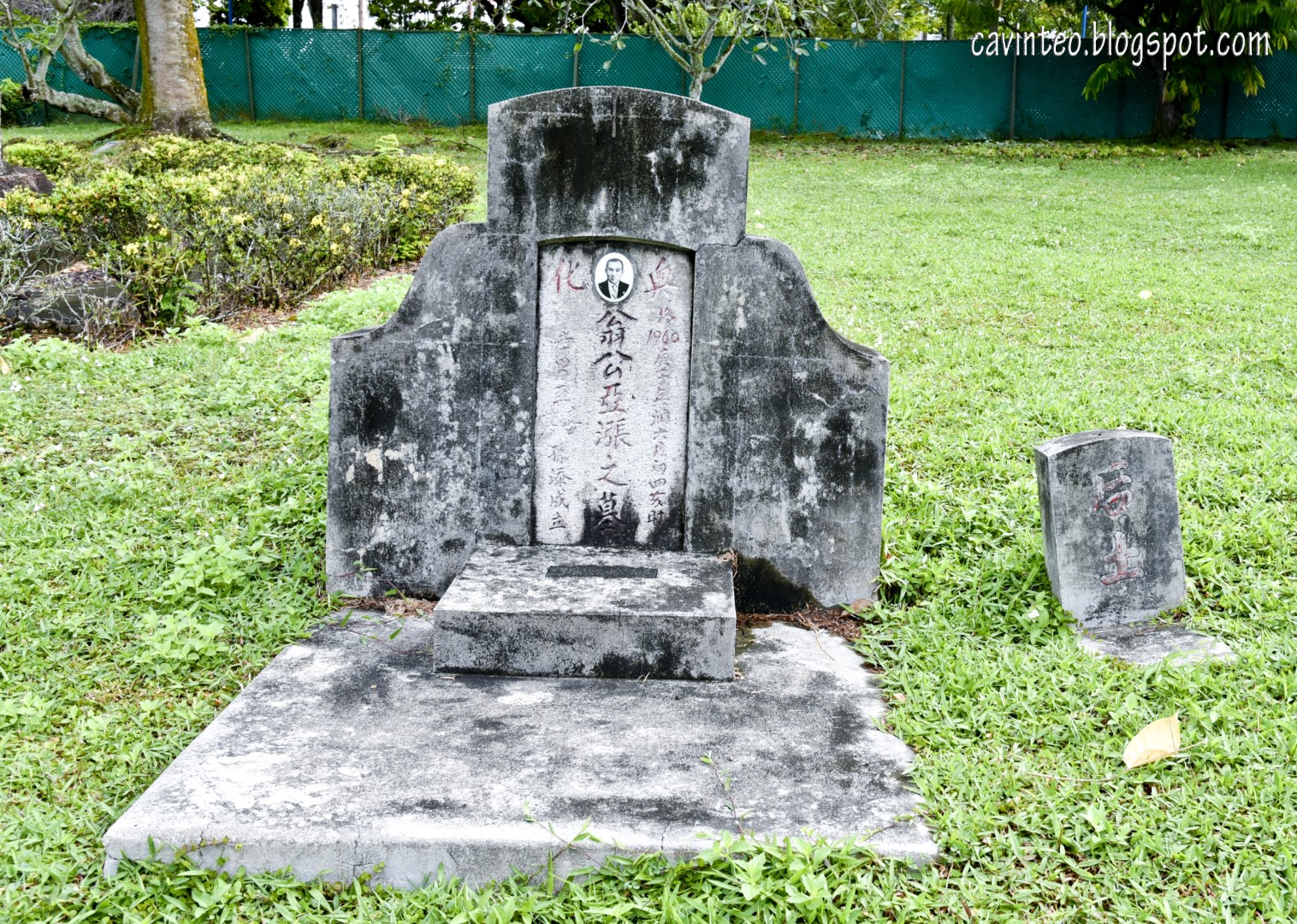
Wait, another Chinese tomb?! From the year, it appeared to be the original tomb keeper for the cemetery, who died in 1960. Then who was in the other tomb? His son? 

Many pigeons, known as spotted doves, in the cemetery.

Random photos; as expected, I got trigger happy and took way too many photographs. That explained the procrastination in posting as I would likely need to sacrifice a few hours to post. 

Anyone knows what is this majestic tree? From a layman's point of view, the trunk seemed to be made up of intertwined vines. Very beautiful though.

A black tombstone! 

Remains of Tomekichi Kusumoto and other navy soldiers. Special mention of Tomekichi Kusumoto as his body was buried in a Christian cemetery and was forgotten for almost 50 years before being transferred over to the Japanese cemetery in 1928.

Tomb of Yoshio Nishimura; a highly respected Japanese and once the President of the Japanese Association in 1933, he killed himself in 1934 after being accused of spying by the British Colonial government.

A unique Japanese tomb with English words.

I mentioned earlier that Japanese cemeteries don't have much statues; there were and the above was an example. I can't really make out the Chinese words.

Another one, albeit a bit scary, as head was missing.

Talking about scary, are there any ghost stories? Technically, people do feel a sense of eeriness when it comes to cemeteries, especially at night. In the daytime, it was a scene of quiet and peacefulness. For night, the cemetery is closed and you can't enter anyway. I didn't hear of any stories but Alex's friend ever shared of a haunted house along the perimeter of the cemetery. 

About to exit the cemetery park! 

This cute scene stopped me in my tracks though. Should this stone monk be alive, I don't think it would calmly stand there and let the lizard have its way. 

=====

Address
825B Chuan Hoe Ave, 
Singapore 549854

Map 
As above

Detailed Park Map
As above.

Infographic Park Map
As above.

Website

Additional Information
No Pokemon Go! 

Saturday, June 25, 2022

Un-Yang-Kor-Dai - A Michelin Plate Restaurant Serving Thailand Isaan Cuisine in Singapore #michelinplate

I remember walking along South Bridge Road after having ice cream at Dopa Dopa Creamery and noticing a pretty crowded restaurant with an interesting name "Un-Yang-Kor-Dai". 

To be frank, I wouldn't have known, by its name, that it serves Thai food. More interestingly, it's actually not Thai cuisine we would be having. With recipes coming from the the northern eastern region of Thailand, it's generally known as Isaan cuisine. 

Un-Yang-Kor-Dai is also a 2021 Michelin plate eatery and has been conferred Thai Select premium award by the Thai government! Given that any dining establishments with Michelin would likely see a queue, it's best to make a reservation via here

We didn't reserve as it was a last minute decision and our wait was almost an hour! Thankfully, we visited Koh Grill & Sushi Bar earlier and hence, weren't too hungry. 

Initially, we thought we had to wait so long because there were limited seating capacity. Turned out there was another area with more tables! What it means? Un-Yang-Kor-Dai's business was really good! 

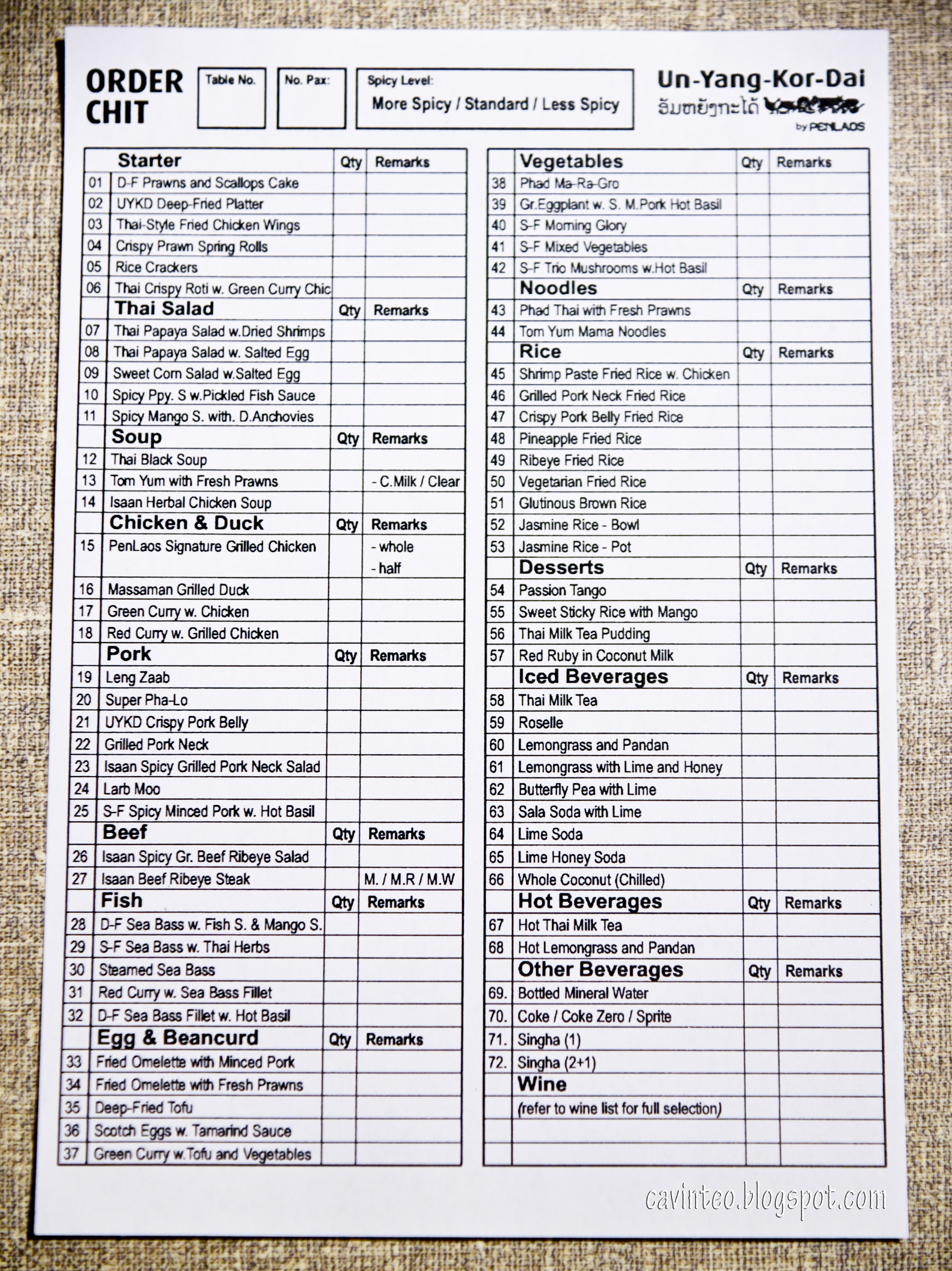
Order sheet! Please refer to the menu, which I would share at the end of this post, on signature dishes and those that would fall under the Isaan cuisine. I guess Singaporeans are not as well accustomed to Isan food and it makes total sense to have our usual Thai favorites on the menu. 

Awaiting our food! 

Prawns and Scallops Cake
- a signature starter and said to be served with green curry paste. Latter didn't seem quite right as the only green appeared to come from cucumber.

Whatever the case, this was delicious! Deep fried to a crisp and served fresh from the boiling oil, the filling was otah-like but softer and better tasting. Dip it into the "I don't think it's green curry paste" for an additional layer of zestiness!

Pork Neck Fried Rice - An Isaan signature dish, it did seem as if the slices of pork neck were not well cooked. In real life, the colour wasn't as pinkish. Anyway, I took an immediate liking to the fried rice; the grains were fluffy and flavourful. A tad spicy though. 

The pork neck had a nice grilled aroma and taste but not something I would purposely order if there are other options like pork ribs, pork belly etc. 

Shrimp Paste Fried Rice with Isaan Grilled Chicken - Isaan cuisine focuses on "less curries, more grilled meats, and spicy salads" and it would have been sacrilegious if we didn't have a bite of the signature grilled chicken! 

I enjoyed the chicken with its moist, tender meat, and a thinly grilled skin marinated with fragrant herbs and spices. Appetizing! The fried rice had that iconic shrimp paste flavor but wasn't as nice as the Pork Neck Fried Rice. A perfect combination would have been the fried rice from Pork Neck Fried Rice and the grilled chicken from Shrimp Paste Fried Rice with Isaan Grilled Chicken.

Thai Milk Tea Pudding - as some of you would know, I am not a fan of Thai milk tea as they are usually too sweet for my liking! 

In pudding form, I thought it was still too high in sugar. The Great Kon loved the smooth texture and that it would literally slide down your throat! I am biased; it might be better for me if they have flavors other than Thai milk tea. 

Sweet Sticky Rice with Mango - my last trip to Bangkok was in January 2020 and since then; I had yet to secure a single morsel of their absolutely amazing mango sticky rice! 

Took a scoop of the rice and a slice of the mango for my personal indulgence; mmmmm, combination of the sweet, non-fibrous mango with the warm glutinous rice, soaked in sweetened coconut milk and then sprinkled with crispy mung beans, brought me to heaven! Definitely one of the better ones I had in Singapore! 

===== 

Honestly, this isn't quite the conventional Thai cuisine and you know who would likely enjoy the food? My mom! Maybe we can arrange this for her birthday in September. Yes, I would note to reserve. p.s. Many thanks to the Great Kon for the birthday treat! 
 
Address 
57 South Bridge Rd, #01-02, 
Singapore 058688

Map 
As above.

Operating Hours
Mondays - Closed
Tuesdays to Sundays (Lunch) - 11.30 am to 2.30 pm
Tuesdays to Sundays (Dinner) - 6.00 pm to 9.30 pm

Website

Menu
As above.

Pricing 
Prawns and Scallops Cake - S$18.00
Isaan Spicy Grilled Pork Neck Fried Rice - S$15.90
Shrimp Paste Fried Rice with Isaan Grilled Chicken - S$16.90
Thai Milk Tea Pudding - S$6.80
Sweet Sticky Rice with Mango - S$12.80
(Subject to Service Charge and GST)

Wednesday, June 22, 2022

Pin Wei Hong Kong Style Chee Cheong Fun (品味港式猪肠粉) @ Pek Kio Hawker Centre [Singapore] #pekkiohawkercentre

In my memory of Pek Kio hawker centre, the most famous stall had to be the prawn noodle (soup) manned by a no-nonsense auntie but in my recent visit; a snaking long queue caught my attention.

Pin Wei Hong Kong Style Chee Cheong Fun (品味港式猪肠粉); with the Michelin guide photo gracing a part of its menu signboard, it's a no-wonder that residents were flocking to get a taste of its signature chee cheong fun.

Exhibiting the skill of rolling the freshly cooked sheet of rice noodle into its finalized product; the rice noodle recipe was the same with differentiation from the fillings that varied from plain, char siew, prawns and scallops.

Only mom was with me and I can only stomach one serving of chee cheong fun. My favorite filling has always been prawns and I guess these three rolls would be more than sufficient, especially when I had 
already ingested pancakes from Yean Heng

A closed up roll - simple enough with not much visual fanfare. Would this be worth the almost 40-minute wait I endured just to get my hands on them with a price tag of S$5.00?

One bite and my eyes went wide. Immediately, I told my mom to take a bite as I can't guarantee she would have anything for herself should she decide to finish her kopi o kosong first! The texture of the chee cheong fun was silky smooth and it was so soft and oily that I didn't need much effort to let it slide down my throat.

The sauce will break or make the dish and I am glad it was the latter. While it might appear to be your usual light soya sauce, this was uniquely flavorful and likely a secret recipe! C'mon, it's listed on Michelin Plate and there must be something that let it stand out from the rest of its competitors! 

Even the sesame seeds played a part; creating an additional layer of crunch and aroma. To be honest, it's been so long since I last had such extraordinary chee cheong fun! Bet Alex would agree with me. 

=====

Address
41A Cambridge Rd, #01-25,
Pei Kio Market & Food Centre, 
Singapore 211041

Map
As above.

Menu
As above.

Pricing
Prawn Chee Cheong Fun - S$5.00